
This guide helps viewers in Greece and Greeks abroad with IPTV issues. It covers how to fix problems like buffering, freezing, and audio/video issues. It also talks about channel gaps and EPG problems.
It offers practical steps to solve these issues without needing to call support right away. The goal is to make viewing stable again.
The article includes quick checks, app settings, and hardware upgrades. It also suggests network improvements and steps to take with your provider. It uses tips from FMUSER.ORG and common practices by Cosmote TV and Nova.
It’s for Greek viewers of Alpha, ANT1, and ERT, expats watching Greek channels, and technicians setting up IPTV boxes.
In this IPTV guide Greece, you’ll find easy diagnostics and bandwidth tips. It also talks about Wi-Fi versus wired connections, middleware, and server quality. Plus, it explains how to handle EPG issues.
If you need IPTV help in Greek, this guide will help you step by step. It also points to advanced maintenance if basic fixes don’t work.

Key Takeaways
- IPTV Troubleshooting starts with basic checks: restart the box, test a wired connection, and verify internet speed.
- In iptv troubleshooting Greece, aim for stable upload/download and prefer Ethernet for live feeds.
- This IPTV guide Greece covers app settings, firmware, and when to contact your provider.
- Use simple logging and monitoring before factory resets to preserve settings and data.
- Keep provider details (Cosmote TV, Nova, ERT streams) handy to speed supplier-side resolution.
What is IPTV and how it works in Greece
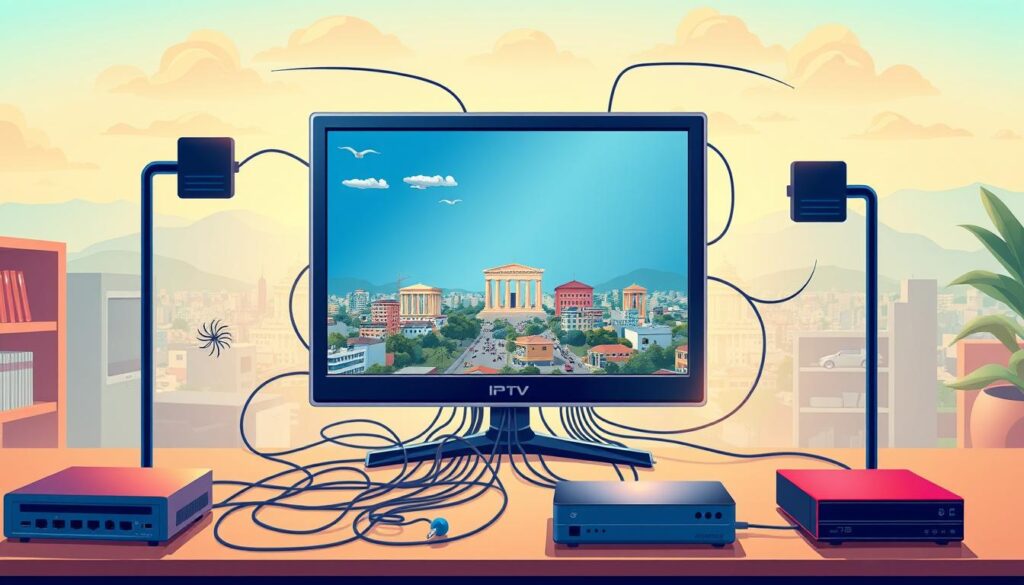
IPTV sends TV over the internet, not through old methods like antennas or cables. It lets people watch live TV and on-demand videos at home or in schools. It’s a mix of live channels, catch-up TV, and movies all in one place.
Definition and core concepts
IPTV turns video into IP packets and sends them over networks. It offers live TV, shows you can watch later, and a big library of movies and TV shows. It’s like OTT services but works differently.
IPTV architecture and delivery
The main parts include content sources, encoders, and streaming servers. You also need CDNs and devices like Amazon Firestick. Good IPTV in Greece needs strong servers and the right software to work well.
Typical Greek IPTV services and use cases
Greek IPTV services give you live channels like Alpha and ERT, sports, and EPG. Prices and channels vary. Expats use VPNs to watch Greek content from abroad.
Popular devices in Greece are Samsung and LG smart TVs, Amazon Fire TV, and Android boxes. Knowing your device and software helps fix issues fast.
IPTV Troubleshooting: common buffering and freezing causes
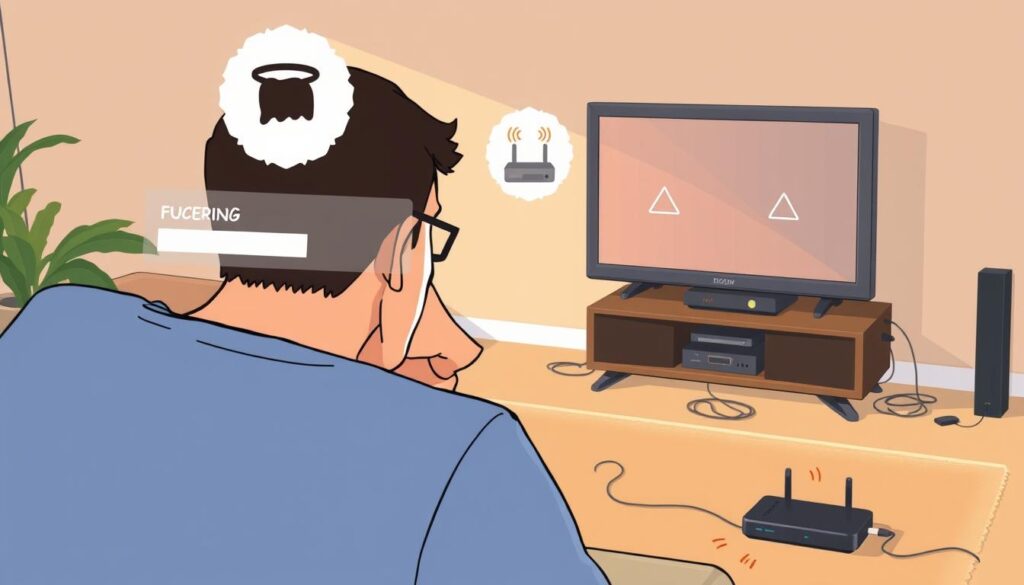
Buffering and freezes can ruin your viewing experience. This guide will help you find out why it happens in Greece. It shows where to start looking to solve the problem.
Internet speed and bandwidth requirements
Streaming needs a steady internet connection. In Greece, you need 15–25 Mbps for HD and 25 Mbps or more for 4K. FMUSER.ORG suggests speeds: 0.5 Mbps is the minimum, 1.5 Mbps is typical, 3 Mbps for SD, 5 Mbps for HD, and 25 Mbps for Ultra HD.
Remember, speeds are for each device. If many devices use the same connection, it can slow down. Heavy downloads or cloud backups can also cause buffering.
Local network issues and Wi‑Fi limitations
Wi‑Fi signal strength and interference are key. Walls, distance, and other networks can weaken your signal. Try moving the set‑top box closer to the router or use an Ethernet cable.
If that’s not possible, choose routers with speeds of 300 Mbps or higher. Mesh systems can help cover larger areas. Powerline adapters offer a wired experience for about $70–$100.
Server quality and source-side bottlenecks
Not all buffering is due to your network. Server quality IPTV varies a lot. Low-cost services often have too many users, leading to problems during busy times. Premium providers have better support, which helps reduce freezes.
Peak times can cause issues even with a good home setup. When many viewers are connected, packet loss and stuttering can happen.
Router, firmware and device limitations
Old or low-end routers can struggle with streaming. Update your router’s firmware and use Quality of Service features to help live video.
Device capability is also important. Cheap Android boxes or generic media players can cause problems. Use a dedicated IPTV box or a modern smart TV app for better performance.
Quick fixes to stop IPTV buffering and improve stability
Small checks and fast tweaks often clear the most common playback hiccups. Use the steps below for practical IPTV Troubleshooting that works well across Greek homes and apartments.
Simple immediate checks
Run an internet speed test to confirm download and upload rates meet channel requirements. Restart modem, router and the IPTV box to clear transient issues. Pause live or VOD playback for a few minutes to allow buffering, especially for long movies.
Stop background downloads, torrents or other streams that compete for bandwidth. Verify mute and volume controls so audio issues are not mistaken for service problems.
Settings and app-level adjustments
Lower stream quality in the app from HD to SD when bandwidth is limited. Many receivers let you increase buffer size; change this in iptv troubleshooting settings to reduce rebuffering. Clear the app cache or app data and update the IPTV app to its latest version.
Confirm middleware, M3U or login credentials are entered exactly as your provider supplied. Incorrect playlist URLs often look like client-side failures when the source is the problem.
Hardware and network upgrades
Prefer wired Ethernet for the IPTV box. If wiring is not possible, use Powerline adapters to approach modem speeds across the home. Upgrade to a modern router with good streaming throughput or choose a dual-band or mesh Wi‑Fi system for larger residences.
Use network adapters rated 300 Mbps or higher or a dedicated set-top box recommended by the service. When several people stream at once, consider increasing your ISP plan to meet the higher bandwidth demand.
Supplier-side steps
Contact your IPTV supplier to check server status or request an alternate stream if a channel stutters. Providers can move channels between servers to test load and may offer premium server options or higher-tier packages to address persistent source-side bottlenecks.
Share your measured speeds and iptv troubleshooting settings with support so they can match server selection to your connection. This speeds resolution and helps fix IPTV buffering faster.
Audio and video problems: diagnosing sound, sync and picture issues
Fixing audio and video problems is common for IPTV users in Greece. This guide shows quick fixes for sound loss, sync delays, and poor picture quality. Try these steps before reaching out to your provider to find the issue and enjoy smooth playback again.
Common audio problems and quick resolutions
For no sound issues, first check the basics. Make sure TV and device volumes are turned up, mute buttons are off, and the input is correct on any soundbar or AV receiver. Try unplugging the IPTV box for 30 seconds, then reboot and wait up to two minutes for audio to start working again.
Look into secondary audio options like SAP or MTS and set them to Channel Default or Stereo. Try bypassing external receivers and test audio directly from the TV. If sound comes back, the receiver settings or HDMI/optical connections might need adjusting. These simple steps can fix many no sound problems.
Fixing audio-video sync and codec issues
For audio lag or lead, restart the app or change channels to refresh streams. Close the app fully before opening it again. Make sure the IPTV app and device firmware are up to date, as some players have audio delay controls in advanced settings.
Try other streaming apps to see if the problem is with the app or your device. If codecs don’t match and the player needs to transcode, try a lower resolution or an alternate stream. If codec issues cause delays, contact your provider for compatible feeds to reduce latency during troubleshooting.
Resolving poor or pixelated video
Pixelation and blocky frames often mean bandwidth issues. Run a speed test and lower the stream resolution to SD if speeds are slow. Restarting your router and streaming device can help clear packet loss.
Use wired Ethernet or Powerline adapters to avoid Wi-Fi interference. If video quality problems continue, check with your provider for server issues or HD feeds. Clearing the app cache and updating the app can also help with playback issues.
Keep a checklist handy: volume checks, power-cycling, app and firmware updates, wired connection tests, and provider queries. These steps are key to effective IPTV troubleshooting. They help solve audio sync and video quality issues quickly, with minimal downtime.
Channel-specific and EPG (program guide) problems
Channel problems and guide errors are common with IPTV in Greece. Start with basic checks before calling support. A short review often solves many issues and speeds up iptv troubleshooting.
Missing channels IPTV Greece can happen for several reasons. If you travel outside Greece, geo-block IPTV limits may hide national streams. Use a reputable VPN with Greek servers, such as NordVPN or Surfshark, to test access from a Greek IP. Providers sometimes reorganize or drop channels, so refresh your M3U playlist and check provider announcements. Look through app favorites and hidden lists; a channel may be inadvertently marked off.
If local checks fail, contact your supplier to confirm licensing or server status. When channels vanish only on one device, clear the app cache, reboot, and retry. These steps often end routine missing channels IPTV Greece reports.
EPG not loading affects planning and viewing. Start by confirming the EPG URL your app uses. An outdated or wrong EPG source will show blank or mismatched guide entries. Restart the device, update the IPTV app, and force an EPG refresh in settings. Some apps let you clear guide cache or import a custom EPG file for more accurate listings.
When the guide stays blank after local fixes, the problem is often provider-side. Ask support to push an EPG update or check their provisioning servers. Keep logs of the exact times the EPG fails; that helps providers pinpoint delivery faults faster.
Channel freezing that affects a single stream points to a bad transcode or server load. Test other channels to confirm the scope. If only one feed stutters, request an alternative stream or a server transfer from your provider. Rebooting the box and clearing app data can remove corrupt buffers and improve stability.
Persistent single-channel issues across multiple devices signal supplier-side faults. Provide the provider with channel name, time of failure, and device model. Those details help resolve recurring problems and speed up iptv troubleshooting.
Advanced troubleshooting and maintenance for Greek IPTV
When simple fixes don’t work, it’s time for deeper checks. This guide will help you clear cache, reset apps, recover devices, and monitor issues. Follow these steps to improve IPTV Troubleshooting and cut down on downtime.
Clearing cache and reinstalling apps
Begin by clearing cache. On Android TV boxes, go to Settings > Apps, then pick the IPTV app. Choose Clear Cache. If problems continue, select Clear Data, but remember this will delete saved logins and settings.
After clearing, reinstall the app from Google Play, Amazon Appstore, or your provider’s APK. Enter M3U URLs, middleware details, and EPG settings to get your service back.
Factory resets and device recovery
Use a factory reset for ongoing issues. First, back up account details and custom settings. For an Android TV box, go to Settings > Device Preferences > Reset. On Fire TV Stick, choose Settings > My Fire TV > Reset to Factory Defaults.
Smart TVs have different paths; check Samsung or LG menus under Settings > General > Reset. Remove external storage and ensure stable power during the reset. A factory reset IPTV box can fix deep software faults and corrupted data.
Monitor logs and track patterns
Keep a log of incidents with times, affected channels, and actions. Run speed tests during failures to link network data with playback issues. Use router QoS dashboards to spot bandwidth hogs.
Enable diagnostic logging in the IPTV app or middleware and share logs with your provider. If you suspect packet loss, jitter, or latency, ask your ISP for a line check or use tools to monitor IPTV logs for trends.
Practical checklist
- Clear cache IPTV first; clear app data if needed.
- Reinstall from official stores or trusted provider files.
- Back up credentials before doing a factory reset IPTV box.
- Monitor bandwidth and record incidents for support.
- Share app and router logs when contacting providers.
These steps will make you a pro at IPTV troubleshooting. Regular maintenance and keeping detailed records will speed up fixes and make support calls more effective.
Conclusion
Start with the basics: check your internet speed and try simple restarts. Use a wired Ethernet connection or Powerline adapters to cut down on Wi‑Fi dropouts. These steps help solve many everyday IPTV Troubleshooting problems in Greece.
Make sure your middleware, M3U credentials, and EPG URLs are correct. Also, keep your IPTV app and device firmware updated. For audio and video issues, check mute and SAP/MTS settings, reboot devices, and bypass external receivers. These actions help fix problems without long downtime.
If channels are missing or geo‑blocked, try a reliable VPN with Greek servers or talk to your provider. They can fix server-side issues and update EPG. Quality servers and modern hardware are key to avoiding buffering and freezing in IPTV troubleshooting.
Keep a simple log of errors and test at different times to find peak-hour issues. Use recommended devices like dedicated IPTV boxes, Amazon Fire TV, or modern Android TV boxes. Share speed-test results and logs with your provider if problems continue. With the right plan, hardware, app settings, and provider support, most issues in summary IPTV Greece can be fixed quickly.