
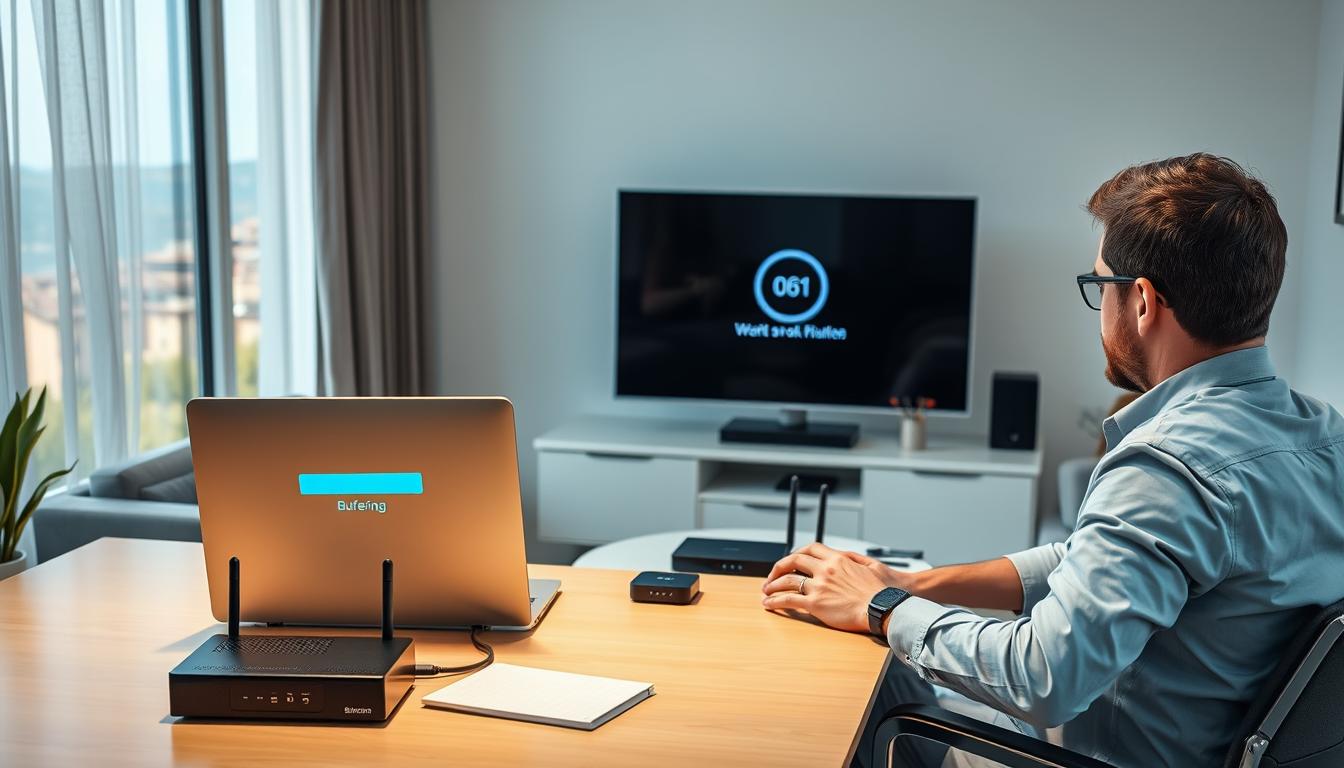
IPTV services have become very popular in Greece. They offer flexibility and a wide range of media. But, many users face IPTV buffering problems that ruin their viewing experience. It’s important to know why these issues happen and how to solve them.
This article will help Greek IPTV users fix these buffering problems. We aim to make streaming smoother and more enjoyable for everyone.
Key Takeaways
- IPTV buffering issues can significantly impact the viewing experience.
- Understanding internet connection speed is crucial for smooth streaming.
- Network configuration plays a vital role in reducing buffering.
- Choosing the right IPTV service provider can mitigate streaming problems.
- Regular device compatibility checks and software updates are important.
Understanding IPTV Buffering Issues
When we talk about IPTV buffering, it’s key to know what it means. Buffering is when data is stored temporarily before it’s played. This ensures your video plays smoothly. But, if buffering gets too long, it means there’s a problem.
What is IPTV Buffering?
IPTV buffering is when data is held temporarily while streaming. It’s meant to make watching videos smooth. But, too much buffering can ruin your experience. Knowing about IPTV buffering helps you spot issues while streaming.
Common Causes of Buffering
There are many reasons why IPTV buffering happens. Here are some common ones:
- Slow Internet Speed: Not enough bandwidth can slow down video loading.
- Network Congestion: Too many devices on the network can slow it down, causing buffering.
- Insufficient Bandwidth: When many devices share the same connection, it can cause delays.
- Outdated Software or Hardware: Old devices or apps can slow down streaming.
- Poorly Configured Router Settings: Wrong router settings can make your network less efficient.

Internet Connection Speed and Stability
Knowing your internet speed is key to solving IPTV buffering problems. A stable connection makes streaming smooth and uninterrupted. Testing your speed regularly can spot issues.
How to Test Your Internet Speed
Use trusted sites to check your download and upload speeds. Fast.com is a quick and easy option. This lets you see if your speed is good for streaming and if you need to upgrade or fix things.
Recommended Speeds for Streaming
For HD IPTV, aim for a speed of 25 Mbps. For 4K, you’ll need at least 50 Mbps. These speeds help avoid buffering and make streaming better. If you’re not there yet, talk to your ISP about improving your connection.
| Resolution | Recommended Speed (Mbps) |
|---|---|
| Standard Definition (SD) | 3-4 |
| High Definition (HD) | 25 |
| 4K Ultra HD | 50 |
Network Configuration and Setup
Setting up your network right is key to a great IPTV streaming experience. It’s important to know how router placement affects signal strength. Also, wired vs wireless connections have their own benefits.
Router Placement for Optimal Signal
Where you put your router is crucial for a strong signal. Place it in the middle of your home, as high as you can, and away from things that block it. Stay away from walls and electronic devices that can mess with your signal.
Using Wired vs Wireless Connections
If you’re having trouble with buffering, think about using wired or wireless connections. Wired connections, like Ethernet cables, are usually faster and more stable. This means less interruption in your streaming. On the other hand, wireless networks can get affected by interference and drop quality, especially in busy areas.
| Connection Type | Speed | Stability | Best For |
|---|---|---|---|
| Wired | High | Very Stable | Streaming, Gaming |
| Wireless | Variable | Less Stable | General Browsing |
Knowing these details helps you set up your network for a smoother viewing experience. With the right setup and connections, you can cut down on buffering. Making changes to your router’s spot and choosing between wired and wireless can make your IPTV service better.
Fix IPTV Buffering: Improve Your Streaming Experience
To make your streaming better, try two things. First, tweak your streaming quality settings. This can really help your IPTV work better. Second, use a VPN to get around your internet provider’s slowdowns.
Adjusting Streaming Quality Settings
Lowering video quality in IPTV apps can cut down on buffering. Many services let you switch between SD and HD. SD uses less bandwidth, making streaming smoother, especially when your internet isn’t the fastest.
Using VPNs to Bypass Throttling
A VPN for IPTV can stop your internet provider from slowing you down. Especially when lots of people are watching. A good VPN, like NordVPN, keeps your data safe and speeds up your stream. It connects you to servers that are less crowded, making your stream much better.
| VPN Providers | Features | Average Speed Improvement |
|---|---|---|
| NordVPN | Strong encryption, large server network | Up to 70% |
| ExpressVPN | High speed, user-friendly interface | Up to 60% |
| Surfshark | Unlimited devices, affordable plans | Up to 50% |
Device Compatibility and Updates
Knowing about device compatibility is key for a smooth IPTV experience. Choosing a device that fits your IPTV service can greatly improve streaming quality. Smart TVs, set-top boxes, and streaming sticks support different codecs or formats.
Learning about these compatibility guidelines helps pick the best equipment. This ensures top performance.
Ensuring Device Compatibility
To get the best streaming, make sure your device meets the IPTV service’s needs. Many services list compatible devices to help you choose. This prevents issues like lag or interruptions.
As IPTV tech grows, using devices that support the latest standards is vital. This ensures a reliable and enjoyable watch.
Importance of Software Updates
Keeping your device updated with the latest IPTV software is crucial. Updates improve performance, security, and features. Regularly checking for updates helps avoid problems like buffering or app crashes.
Staying current means getting new content formats and better functionality. This makes streaming smoother.
Choosing the Right IPTV Service
Finding the right IPTV service requires careful evaluation. It’s important to look at several factors to pick the best one. You should compare different providers based on their offerings, performance, and how satisfied users are.
The quality of service greatly affects your viewing experience. So, it’s key to choose wisely.
Evaluating Different IPTV Providers
Not all IPTV providers are the same. To evaluate them well, consider these key points:
| Provider | Uptime Guarantee | Channel Selection | Pricing | Available Packages |
|---|---|---|---|---|
| Provider A | 99.9% | 200+ | $30/month | Standard, Premium |
| Provider B | 99.5% | 150+ | $25/month | Basic, Standard, Family |
| Provider C | 99.8% | 100+ | $20/month | Standard |
Considering Reviews and User Feedback
User reviews are very helpful in understanding IPTV services. Look at reviews on Trustpilot or forums to learn more. What others say can really help you decide.
Troubleshooting Common Buffering Problems
Buffering issues can be really annoying, especially when you’re trying to watch your favorite shows. To fix these problems, there are a few steps you can take. These steps can make your streaming experience much better.
Resetting Your Device and Router
One simple way to solve buffering problems is to reset your device and router. This can get rid of any temporary issues. First, turn off your streaming device and unplug your router. Wait for 30 seconds before plugging them back in.
This can make your devices work better and improve your streaming quality.
Clearing Cache and Data from Apps
Another good idea is to clear the cache and data from apps. Too much cache can slow down your device. Go to your device’s settings to find how to manage cache and data.
By clearing the app cache, you can make your streaming service work better.
| Step | Description | Benefits |
|---|---|---|
| Reset Device and Router | Power cycle both devices to reset connections. | Clears temporary glitches, restoring functionality. |
| Clear App Cache | Delete stored cache and data from applications. | Frees up resources for improved performance. |
By following these steps, you can cut down on buffering problems. This makes your streaming experience more enjoyable. Doing these steps often can help keep your streaming smooth.
Optimizing Your Wi-Fi Network
To get the best out of IPTV, you need to optimize your Wi-Fi network. There are ways to boost performance and cut down on interruptions. These steps are key for a smooth viewing experience.
Improving Wi-Fi Signal Strength
Moving your router to a central spot in your home is crucial. It helps avoid interference from walls and other things. Wi-Fi extenders can also help cover more area, especially in big homes.
Choosing the 5GHz band can make your streaming better. It’s less crowded than the 2.4GHz band, leading to a better viewing experience.
Advanced Router Settings for Better Performance
Looking into advanced router settings can really help your Wi-Fi. Quality of Service (QoS) settings make sure IPTV streams smoothly. By tweaking these, your router can manage bandwidth better.
This means a more stable connection and better streaming. Using these advanced settings can greatly improve your viewing experience.
Using IPTV Apps Effectively
There are many IPTV apps out there. Choosing the right one can greatly improve your streaming quality and experience. It’s important to pick an app that fits your needs and works well on your device.
Choosing the Right IPTV App
Finding the perfect IPTV app is key to a great viewing experience. Apps like iPlayTV are known for being easy to use and packed with features. Look for an app that offers the channels and video quality you want, and works on your device.
Reading reviews and comparing features can help you make a good choice. This way, you can watch your favorite shows without any problems.
Configuring App Settings for Smooth Streaming
After picking and installing your IPTV app, it’s time to set it up. Making a few tweaks can make your streaming much better. Here are some tips:
- Adjust buffer settings to cut down on lag.
- Turn auto-play on or off, depending on how you watch.
- Choose the video quality that matches your internet speed.
By fine-tuning these settings, you can enjoy smooth, uninterrupted streaming. It’s worth the effort for a better viewing experience.
Conclusion
Fixing IPTV buffering is key for users in Greece who want smooth streaming. This article has shown important steps to improve your viewing experience. These include checking your internet speed and setting up your network right.
Choosing the right IPTV services and apps also matters a lot. It helps you stream IPTV without any hitches. This way, you get the best from your subscription.
By following the tips in this article, you can fix buffering problems. This includes setting up your router correctly and solving common issues. These actions will make your IPTV experience better.
Investing in your technology and internet management is worth it. It ensures you enjoy your favorite shows without any interruptions.